
Occurrence and spatial distribution is a crowded corner. By one count it touches 394 different keywords, and almost none of them get studied together. Plastic type, particle size, dose, soil texture, co-contaminants, the microbes that grow on the plastic surface: each is measured on its own all the time, and hardly ever in the same experiment.
Start with where the plastic comes from, because that already breaks any clean single-variable story. One review names plastic mulch film as the biggest source on farmland, with sludge, compost, air fallout, tyre wear, and coated fertilizers behind it, and near 700,000 tonnes reaching farms in Europe and North America each year (Sajjad et al., 2022). A field does not get one plastic at one dose. It gets a moving mixture, and the same review notes the plastic carries phthalates, antibiotics, metals, and other pollutants along with it. That is the interaction nobody has pinned down: the plastic and the chemicals it carries arrive together and get tested apart.
Now watch two careful studies almost talk past each other. In a year-long rice-wheat greenhouse study, regular polyethylene and biodegradable PLA were added at three sizes and a fixed 0.5% dose. Both shifted the soil from large crumbs to fine ones, and the damage barely changed with plastic type or particle size (Han et al., 2024). Read alone, that says the plastic's identity hardly matters.
A second study looked at the microplastisphere, the thin film of soil against each plastic particle. There a biodegradable polymer, PHBV, was eaten by microbes as food, which raised their growth and enzyme activity and changed which ones dominated (Zhou et al., 2021). At the bulk scale the two plastics look interchangeable. At the scale of a single particle, the biodegradable one feeds the microbes and changes the community. Same material, opposite readings, because the two studies measured at different scales.
A broad review of soil microbes ties this together and states the real problem. Microplastics tend to raise plastic-degraders like Actinobacteria and Proteobacteria while lowering overall variety, and they can lift nitrogen-fixers while suppressing the microbes that make nitrogen usable to plants, with every effect depending on dose, plastic type, and soil (Aralappanavar et al., 2024). The field admits the outcome depends on the combination of factors, then keeps running experiments that hold all but one factor fixed. The oldest review here already framed soil plastic as a contaminant that moves through the profile and up the food chain (Guo et al., 2020), processes where several factors act at once.
We have measured each factor carefully, one at a time, and almost never combined them in one experiment.
- Type
- Interaction, rarely co-studied
- Field
- Soil microbial ecology
- Comparative basis
- Single-factor vs. combined designs
- Methods
- 16S sequencing, aggregate sieving, zymography
Why this is answerable now
Realistic doses matter now
The microbial review calls for long-term field studies at realistic amounts, not the short, high-dose jar tests most results rest on. Interaction studies are exactly what that shift needs, and the field is asking for them.
Biodegradable sold as the fix
The obvious move is to swap regular plastic for biodegradable versions. But Han found the biodegradable kind hurt about as much, and we are spreading it on farms before testing type against dose and soil.
The mixtures keep growing
Farmland gets plastic from mulch film, sludge, compost, air fallout, tyre wear, and coated fertilizers at once, and the plastic carries other pollutants with it. The real exposure is combined, so single-factor answers age fast.
The tools already exist
16S sequencing with co-occurrence networks, zymography, and aggregate sieving are all in routine use in these very papers. Running them across a factorial design is a matter of planning, not new instruments.

Sources cited
Papers I read for this question. These notes distinguish reviews from primary studies and identify the limits of my access.
The 2020 review that said soil was ignored next to the ocean.
Best current summary of the microbe and nutrient effects.
Top source is mulch film. No standard way to measure yet.
04Microplastics alter soil structure and microbial community
Primary experimentGreenhouse test: biodegradable harmed soil structure like regular plastic.
Microbes ate the biodegradable plastic and sped up. Abstract only.
What’s missing — the gap
Cross regular and biodegradable plastic against realistic doses, particle sizes, and soil types in one field-scale experiment instead of one factor at a time. Do the effects on soil structure and microbes stay independent of plastic type and scale, the way Han found at the bulk scale, or do type, dose, and scale interact strongly enough to flip which plastic looks worse, the way Zhou's particle-scale result hints?
This could go either way, and the two studies we have point in opposite directions. Han saw the plastic's identity barely move the structural damage at the bulk scale. Zhou saw it matter a great deal at the scale of a single particle. No one has crossed plastic type against dose, size, and scale in one design, so we cannot yet say whether those readings contradict each other or just answer different questions.
First moves
- 1
Cross two factors first
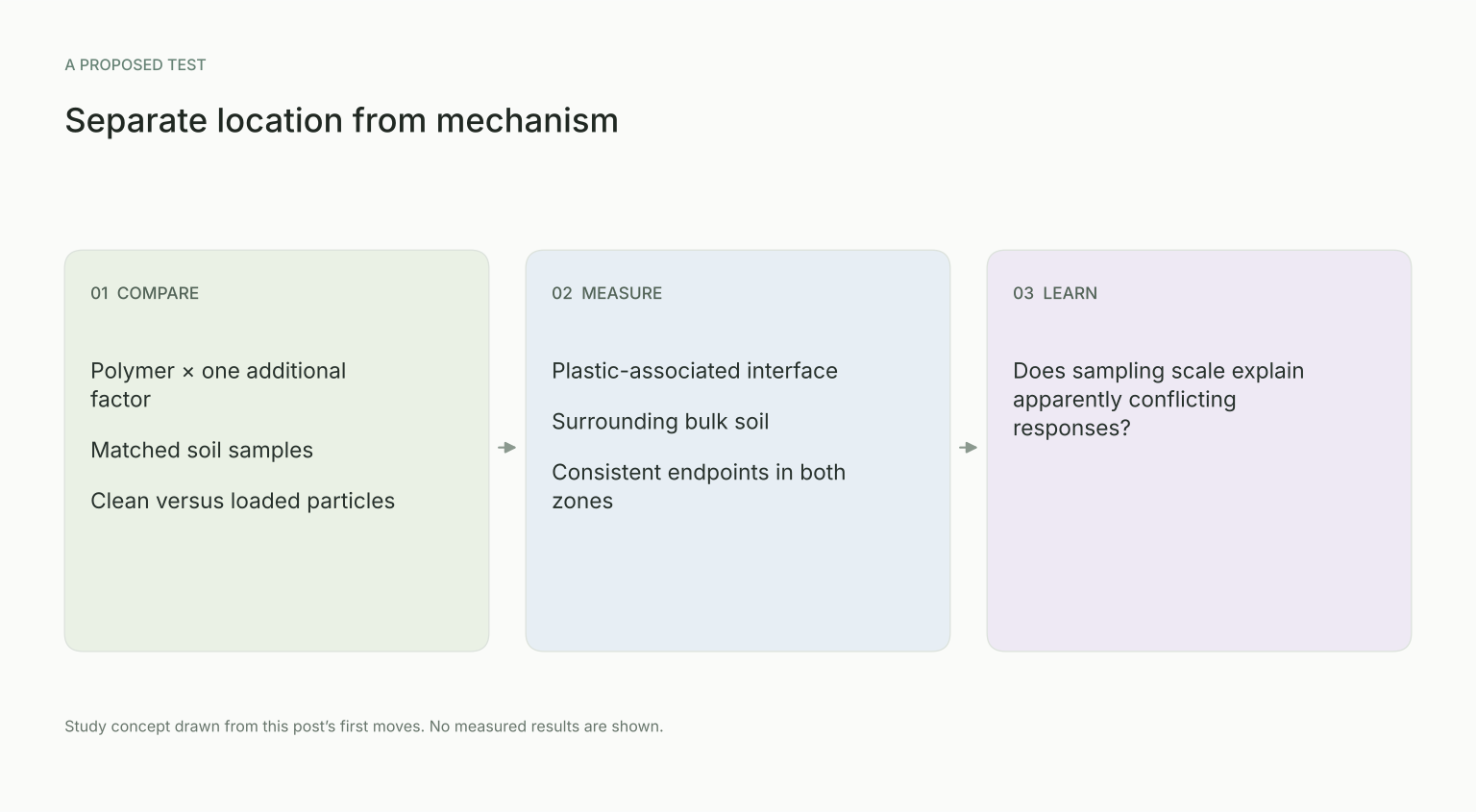
Run one factorial that crosses plastic type against a realistic dose gradient in a single soil, measuring bulk aggregate structure and particle-scale enzyme activity in the same samples. That alone tests whether Han's and Zhou's results are one soil seen at two scales.
- 2
Test the plastic with its passengers
Since microplastics arrive carrying phthalates, antibiotics, and metals, pair a clean-plastic arm with a plastic-plus-sorbed-contaminant arm at matched doses. That turns the carrier role Sajjad describes into a measured interaction instead of two separate literatures.
- 3
Use one shared protocol
Because no standard soil sampling or extraction method exists, agree on one protocol up front and report full particle detail, so the factorial can later be pooled with others. An interaction study is only worth running if its numbers can be compared.
My working hypothesis
The field keeps showing that context decides the outcome, then carefully removes the context. My honest guess is that plastic type matters little at the bulk scale and a lot at the particle scale, so Han and Zhou are answering different questions rather than contradicting each other. The most useful next study is one factorial that crosses plastic type against a realistic dose and measures both scales in the same soil. One of those would teach more than another round of single-factor tests.
An invitation
If you run soil-microplastic experiments, I would like to know whether the single-factor design is a real scientific choice or just the easiest path. From the outside it looks like we keep proving that context decides the outcome, then removing the context. The one study that crossed plastic type against size found type barely mattered at the bulk scale, while the one that looked at the particle scale found it mattered a lot. If someone has already crossed these factors in one design, where should I be looking?
Questions about this gap
Why not combine the effects from separate papers?
Different soils, doses, polymers, and sampling scales may change the response. Adding separate findings does not test whether the factors interact in the same soil.
What does sampling scale mean here?
It means distinguishing the plastic-associated interface from bulk soil. A local hotspot can coexist with a different average response in the surrounding material.
Why begin with two factors?
A small, replicated factorial design can answer a clear interaction question. Too many factors at once can make it difficult to identify what drove the result.
What does a clean-versus-loaded particle comparison test?
It asks whether the particle’s co-contaminant changes the response beyond the bare particle. The loading and the free-contaminant comparison must be documented.
Would opposite local and bulk responses be contradictory?
Not necessarily. They describe different parts of the system. Measuring both in one design would test whether spatial scale explains the apparent disagreement.