
Polymer identification is studied constantly, and so are soil pH, enzymes, heavy metals, and extraction chemistry. What I almost never see is the polymer type sitting in the same experiment as the thing it might be interacting with.
Start with the study that convinced me the interaction is real. Zhao and colleagues mixed 12 microplastics into a loamy sandy soil, 4 shapes across 8 polymer types, all at 0.4 percent, for 31 days, then watched soil pH, respiration, and 4 enzymes. The effects were not uniform. Soil pH rose with foams and fragments. Beta-glucosidase fell with foams. Cellobiosidase fell with fibers, films, and foams. Acid phosphatase barely moved.
So the same soil responded differently depending on which plastic you handed it, and the polymer's identity and shape did the sorting. The authors conclude shape, polymer type, and time all matter and together drive the messy, context-dependent results the rest of the literature keeps reporting.
Here is where the papers start talking to each other. An and colleagues pooled 790 data sets from 39 studies of soils polluted with both microplastics and heavy metals, and ran an interaction detector. It flagged interactions between microplastic traits, especially polymer type, and the soil's own properties on how available the metals became. So whether a plastic makes lead or cadmium more mobile depends on which polymer it is and what soil it sits in. That matches Zhao's shape-by-polymer sorting from a completely different angle. An and colleagues note one clean exception: polyamide had little or no effect. Preview only, so I hold the finer methods loosely.
The tools to study these interactions at scale are still being invented, which is what makes the gap feel live. Scopetani and colleagues point out that validated extraction protocols are lacking, and that density separation quietly fails to recover high-density polymers, so your data set is biased before you have identified a single particle. Their oil-based method uses the oil-attracting nature of plastic instead of density, and recovered low, medium, and high density polymers at 90, 97, and 95 percent. Abstract only.
If your extraction can only see the plastics that float, you cannot honestly ask which polymer interacts with which soil process, because you have already lost half the polymers. I keep coming back to that. We have one study showing polymer type steers enzymes, another showing it steers metal availability, and a methods literature admitting we cannot yet reliably pull every polymer out of the dirt to test it.
- Type
- Under-studied interaction
- Field
- Polymer identification and spectroscopy
- Comparative basis
- Polymer type vs. soil process, co-studied
- Methods
- Incubation enzymes, interaction detector, oil-based extraction
Why this is answerable now
The interaction is documented
Zhao's incubation and An's 790-data-set meta-analysis independently show polymer type interacting with soil chemistry, enzymes in one and metal availability in the other. The signal is already in the literature. What is missing is co-study by design.
A detector already exists
An and colleagues used a tool built to flag interactions between polymer type and soil properties. The analytical machinery for this question is off the shelf. It just has not been pointed at co-designed experiments.
Extraction is catching up
Scopetani's oil-based method recovers high-density polymers that density separation misses, 90 to 97 percent across density classes. For the first time you can plausibly recover the full polymer set from a soil, which is the precondition for studying interactions honestly.
Soil is still neglected
Chia and colleagues frame soil and groundwater microplastics as understudied next to the ocean and lakes. Getting the interaction question right early, before habits harden, is cheaper than untangling it later.

Sources cited
Papers I read for this question. These notes distinguish reviews from primary studies and identify the limits of my access.
01Microplastics increase soil pH and decrease microbial activities by shape, polymer type, and time
Primary experimentShape and polymer sorted the effects on pH and enzymes over 31 days.
02Microplastic pollution in soil and groundwater: a review
Abstract onlyFrames soil and groundwater as understudied next to marine systems. Abstract only.
03The effects of microplastics on heavy metals bioavailability in soils: a meta-analysis
Meta-analysisA detector flagged polymer type interacting with soil properties on metal availability.
Surface chemistry, not presence, governs how one named polymer behaves. Abstract only.
05Olive oil-based method for extracting and identifying microplastics in soil and compost
Abstract onlyNear-flat recovery across density classes, the precondition for honest interaction work. Abstract only.
What’s missing — the gap
Does the effect of a microplastic on a given soil process, whether pH, enzyme activity, or metal availability, depend on polymer type in a way that cannot be predicted from concentration or shape alone?
Polymer type has now been shown to steer soil enzymes in one study and heavy-metal availability in another, yet almost no experiment measures the identified polymer and its interacting soil process together. Until someone runs that design on purpose, we are inferring the interaction from studies that were never built to test it.
First moves
- 1
Co-design one factorial
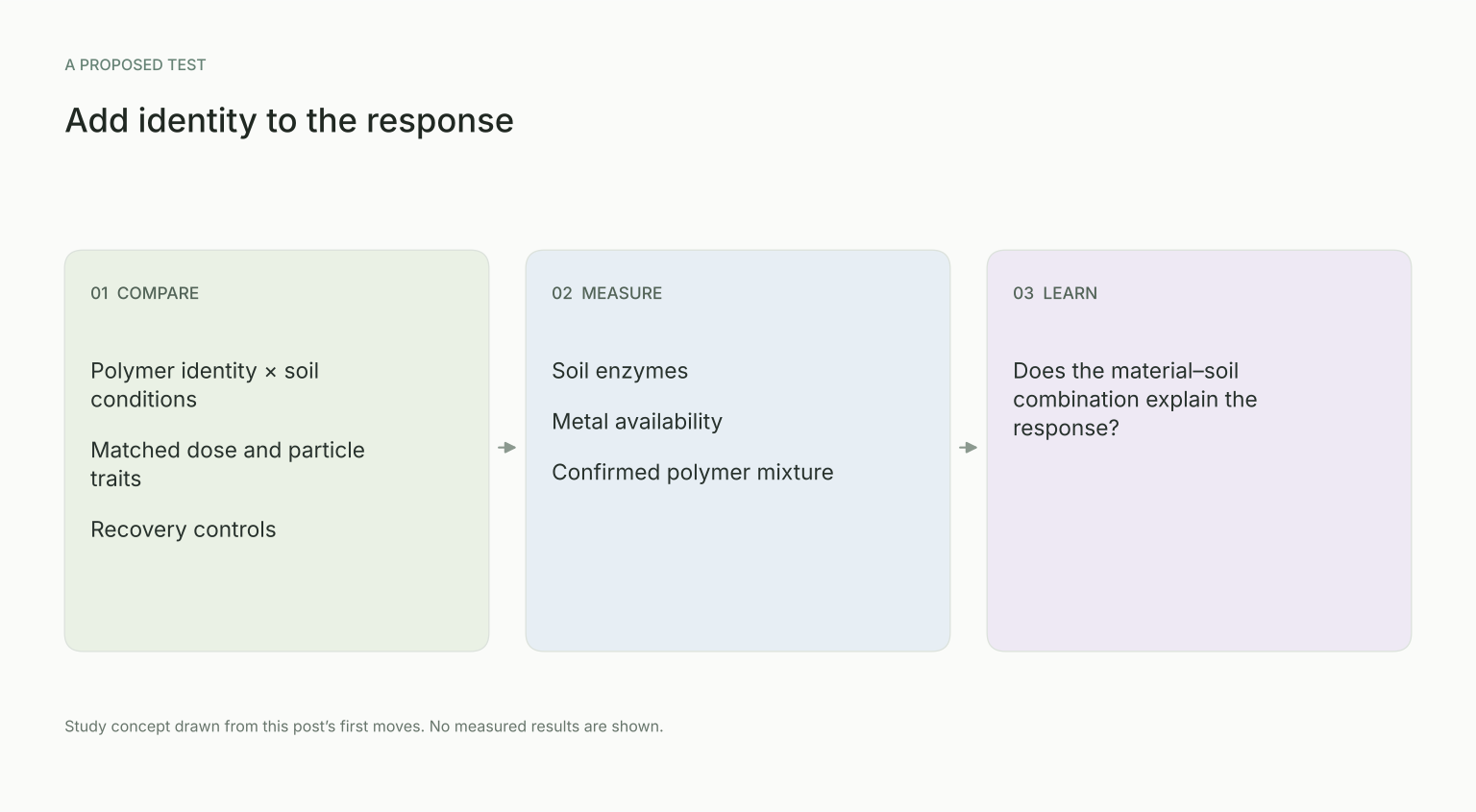
Take Zhao's 12-microplastic layout and cross it fully with a soil-property gradient, pH and organic matter, the two An flags most. Measure enzymes and metal availability in the same soils so polymer type and soil chemistry can vary at once and the interaction can actually show up.
- 2
Point the detector at fresh data
An's detector already works on pooled studies. Run it on a single co-designed data set where extraction bias is controlled, and see whether the polymer-type interaction survives when it is not being pooled across mismatched methods.
- 3
Fix extraction first
Adopt Scopetani's oil-based recovery before any interaction study, so high-density polymers are not silently dropped. Confirm even recovery across your polymer set, then run identification, or the interaction you report is really an artifact of what your method could see.
Where I land
Where I land: polymer identity deserves to sit inside the experiment, not in the caption. Two very different setups, a lab incubation and a meta-analysis, both point at polymer type as an ingredient in the interaction, and polyamide's clean miss shows that microplastic hides real chemistry. My read is that the missing study is not blocked by ideas or tools. It is blocked by habit, plus an extraction step that has to be fixed first.
An invitation
If you work on soil microplastics, I would love to know whether you think polymer identity deserves to sit inside the experiment rather than in the caption. The pieces seem to be here: polymer type steering enzymes, polymer type steering metal availability, and an extraction method that does not discard the heavy polymers. I have yet to find the study that puts them in one design on purpose. Am I wrong to find that odd, and where would you push back?
Questions about this gap
What is being crossed with polymer identity?
The question connects polymer identity with soil conditions and biological or chemical endpoints. It asks whether those combinations explain responses that a total particle count misses.
Why measure metal availability and enzymes together?
They represent different parts of the same proposed interaction: contaminant behavior and soil biological function. Measuring both can show whether their responses coincide.
Does one polymer’s weak effect make it universally inert?
No. A result belongs to its tested dose, soil, particle properties, and endpoint. The proposed design examines whether changing that context changes the response.
How could recovery bias mimic a polymer effect?
If an extraction misses some polymers more often than others, the measured mixture can differ from the actual mixture. Recovery checks are needed before interpreting the biological comparison.
Could existing datasets answer this alone?
They may suggest patterns, but incompatible methods or missing polymer identities limit comparisons. A controlled factorial study would test the combination directly.