
In real ground, the carbon cycle and the nitrogen cycle run on mostly the same microbes. Push on one and the other has to move. We have careful work on each half and almost none on the link.
Start with the carbon side, where the sharpest single experiment sits. Zhao, Lozano and Rillig mixed 12 different plastics, 4 shapes and 8 polymer types, into a loamy sandy soil at 0.4% by weight and watched it for 31 days. Shape and polymer and time all mattered. Soil pH rose with foams and fragments, respiration mostly held steady except for a bump under polyethylene foam, and most of the carbon enzymes were held back, with beta-glucosidase and cellobiosidase falling under several plastics.
Beta-glucosidase and cellobiosidase are the tools microbes use to cut cellulose into sugars they can eat. Knocking them back means the soil digests its dead-plant carbon more slowly. The same study also measured a nitrogen enzyme in the same pots, N-acetyl-beta-glucosaminidase, which chews the nitrogen-rich material in fungal walls and insect shells, and it dropped under fibers and fragments too. Two cycles, one experiment, both bending at once.
That paired measurement is rare, and it is the link the field usually leaves loose. Aralappanavar and colleagues reviewed the nitrogen story and it gets stranger: across contaminated soils, plastic tends to raise nitrogen-fixers while lowering nitrifiers and ammonia oxidizers, and the size and direction depend on dose, plastic type, and soil. So plastic can pump more raw nitrogen in through the fixers while jamming the step that turns ammonium into nitrate. The total budget can swing either way.
Now set that beside Zhou and colleagues watching a biodegradable plastic, PHBV, at the millimeter-thin skin they call the microplastisphere. There microbes ate the plastic as carbon, growth and activity climbed, and beta-glucosidase and leucine aminopeptidase ran 0.6 to 5.0 times higher than in the root zone. Leucine aminopeptidase strips nitrogen off peptides. At that surface the carbon enzymes and the nitrogen enzymes fire together, the mirror image of the broad slowdown Zhao saw in bulk soil.
Read side by side these papers disagree, and the disagreement is the point. Zhao's bulk soil shows carbon and nitrogen enzymes both suppressed. Zhou's plastic surface shows both enhanced. Aralappanavar's review says the nitrogen steps split, some up and some down. None of them traces how a shove to the carbon side reaches the nitrogen side in the same soil over the same time.
The place to answer that is the one everyone agrees is neglected. Guo and colleagues call soil plastic an emerging problem studied far less than the marine kind, and Chia and colleagues say soil and groundwater lag further still. I keep coming back to the same puzzle: careful work on the carbon half, careful work on the nitrogen half, and almost no one tying the two ends into one knot.
- Type
- Interaction, understudied
- Field
- Soil biogeochemistry, microbial ecology
- Comparative basis
- Carbon-cycle vs. nitrogen-cycle studies
- Methods
- Enzyme assays, zymography, respiration
Why this is answerable now
Both cycles, one crew
The microbes that break down carbon and the ones that turn over nitrogen overlap heavily. The enzyme data already shows plastic hitting both at once, suppressed together in bulk soil and amplified together at the plastic surface. Nobody has made that the question.
Nitrogen points both ways
Plastic tends to raise nitrogen-fixers while lowering nitrifiers and ammonia oxidizers, with the net outcome hinging on dose, type, and soil. That push-and-pull only resolves if you measure the carbon and nitrogen steps together.
Soil is the late arrival
Soil plastic is studied far less than the marine kind, and soil-and-groundwater work lags further still. The coupled question is wide open mostly because the whole area arrived late.
The tools sit in one lab
One incubation can now measure respiration, carbon enzymes, and nitrogen enzymes side by side, and zymography can localize them at the plastic surface. The excuse for studying one cycle at a time is gone.

Sources cited
Papers I read for this question. These notes distinguish reviews from primary studies and identify the limits of my access.
The review framing soil plastic as neglected next to the ocean.
Nitrogen steps split, some up and some down, depending on dose and soil.
Carbon and nitrogen enzymes both rose at the plastic surface. Abstract only.
04Microplastics increase soil pH and decrease microbial activities
Primary experimentCarbon and a nitrogen enzyme suppressed together in the same pots.
05Microplastic pollution in soil and groundwater: a review
Abstract onlyWidens the neglect argument down into groundwater. Abstract only.
What’s missing — the gap
When soil microplastics are studied with carbon and nitrogen processes tracked together in the same soil over the same time, does a plastic-driven shift on the carbon side reliably predict the direction and size of the shift on the nitrogen side, or do the two cycles come apart in ways single-cycle studies cannot see?
The coupling is already in the data. Zhao's bulk soil suppressed carbon and nitrogen enzymes together, and Zhou's plastic surface raised them together. Nobody has run the experiment that keeps both in view at field-realistic doses and asks whether faster carbon turnover feeds or starves the nitrifiers, and whether the fixers' extra nitrogen reaches the plant or leaks away. Each of us tends to publish the cycle we know best and leave the other to someone else.
First moves
- 1
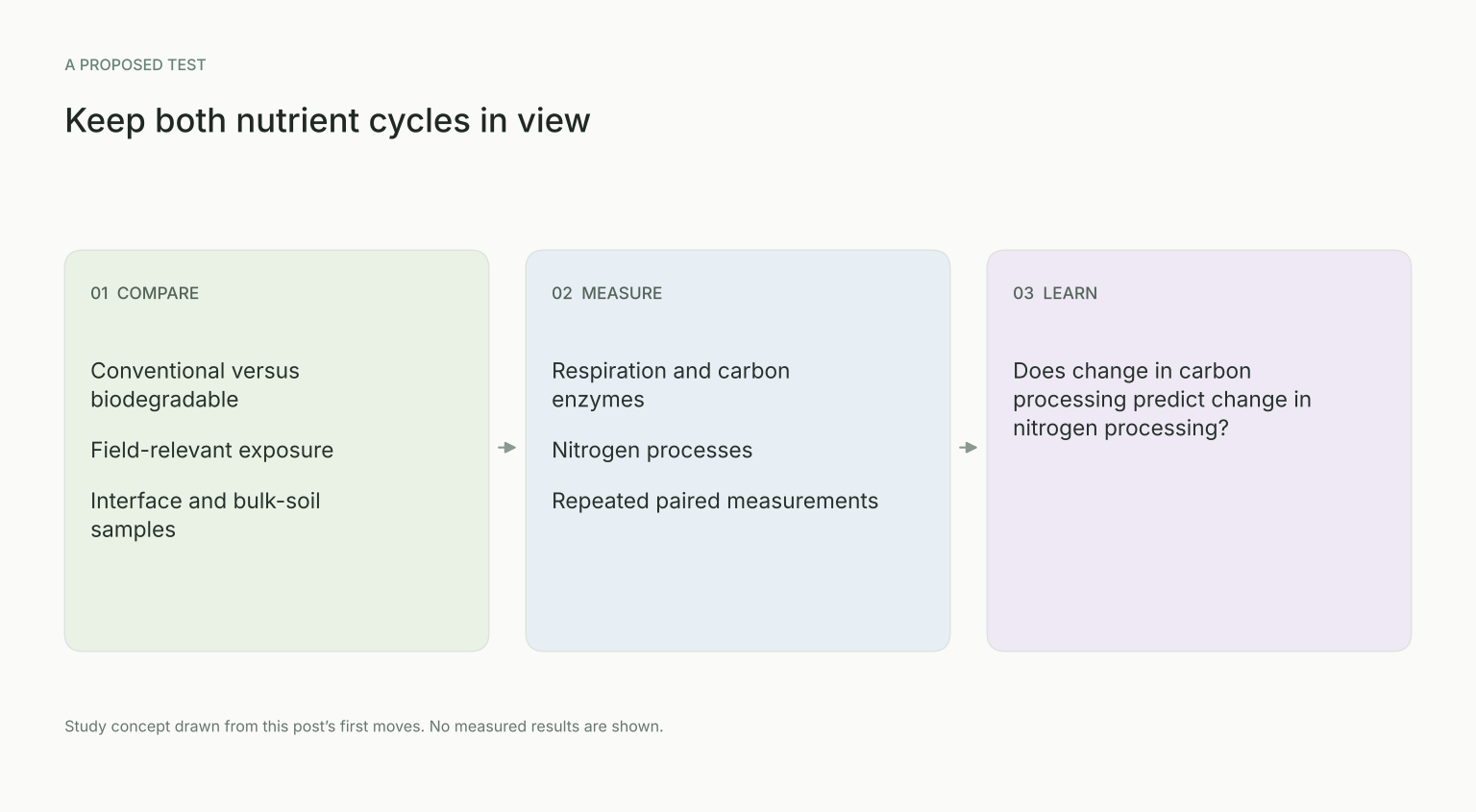
Measure both cycles in one run
Run one field-dose incubation that tracks carbon and nitrogen on the same samples over time: respiration and carbon enzymes like beta-glucosidase alongside nitrification, nitrogen-fixation, and a nitrogen-releasing enzyme like leucine aminopeptidase. Capture the link directly instead of stitching it from separate papers.
- 2
Cross plastic type against the coupling
Put a biodegradable polymer beside a conventional one and test whether the surface's paired acceleration or the bulk-soil paired slowdown is the rule. Span the two settings that now point opposite ways, to find what flips the sign.
- 3
Separate the surface from the bulk
The plastic surface and the surrounding soil seem to behave oppositely. Sample both zones in the same pot with zymography and map where turnover speeds up versus slows down, to test whether the disagreement is really about scale.
Where I land
Where I land: I think the carbon side and the nitrogen side are one machine in real soil, and studying them apart has hidden a real coupling. My guess is that faster carbon turnover at a plastic surface pulls nitrogen release along with it, while bulk soil at a heavy dose slows both, so scale explains a lot of the apparent contradiction. But that is a guess. Until one experiment keeps carbon and nitrogen in view at once, we are reading two halves of a sentence and pretending we know the whole thing.
An invitation
If you work on soil carbon, or on nitrogen turnover, or on the enzymes between them, this gap sits right on the seam of your fields. It stays open mostly because each of us publishes the cycle we know best. I would love to know whether an experiment that watches carbon and nitrogen at once would show them moving in lockstep or pulling apart, and which one you would trust as the early warning for the other. Am I wrong to find it strange that we measure each half so carefully and almost never watch them move together?
Questions about this gap
What does coupling carbon and nitrogen mean here?
It means testing whether changes in carbon processing predict changes in nitrogen processing within the same soil and time period, rather than assuming the two cycles move together.
Why is enzyme activity not the whole answer?
Enzyme assays describe particular activities under their measurement conditions. They do not alone establish nutrient fluxes, plant availability, or losses from the system.
Why sample the plastic surface separately?
The local interface may respond differently from bulk soil. Measuring both helps test whether spatial scale explains apparently opposite results.
What does a matched polymer comparison resolve?
Testing conventional and biodegradable materials in the same soil with the same assays reduces the differences that make separate studies difficult to compare.
Could faster carbon processing coexist with poor nitrogen availability?
That is one possibility the study is intended to test. The direction of the relationship should be measured rather than inferred from an increase in one enzyme.