
Counting plastic in soil gets studied hard. Naming the polymer sits right next to it and gets much less attention. We answer how much well and which one poorly.
Here is why that split bothers me. When Zhao and colleagues mixed 12 microplastics into a loamy sandy soil at 0.4 percent by weight and watched it for 31 days, the effects did not track with amount. They tracked with kind. Soil pH climbed with foams and fragments, respiration mostly held except for a jump under polyethylene foams, and the enzymes that break down carbon and nitrogen compounds dropped in shape- and polymer-specific ways.
So the same mass of plastic did very different things depending on shape and polymer. If the harm is written in polymer identity, then a survey that reports how much but not which one has measured the loud part and skipped the part that predicts the damage.
This is not one study's quirk. The meta-analysis by An and colleagues reads the same pattern from the other side. Pooling 790 data sets from 39 studies, they found microplastics can raise how available copper, lead, cadmium, iron, and manganese are, while polyamide had little or no effect. Their interaction detector flagged polymer type as a key modifier of the soil-chemistry response. That is exactly the variable a pure abundance count throws away. I read the preview only, so I hold the finer methods loosely.
Meanwhile the review by Chia and colleagues, surveying soil and groundwater as understudied ground, still leans on coarse descriptors like fibers and pellets being the common shapes rather than resolved polymer spectra.
It is not that we lack the tools to name polymers. Identification and quantification travel on separate tracks. Scopetani and colleagues built an oil-based extraction that uses the oil-attracting nature of plastic instead of density, and recovered low, medium, and high density polymers at 90, 97, and 95 percent across 6 spiked polymers, because standard density separation keeps losing the heavy ones. That is a counting-and-naming method built together, which is what makes it the exception. Most of the field still reports a number without the spectrum behind it. The studies telling us identity matters most are rarely the same studies doing the careful counting.
- Type
- Coverage imbalance
- Field
- Polymer identification and spectroscopy
- Comparative basis
- Abundance counting vs. polymer naming
- Methods
- Incubation enzymes, meta-analysis, oil-based extraction
Why this is answerable now
Identity predicts harm
A 31-day incubation and a 790-data-set meta-analysis both land on polymer type, not sheer amount, as the variable that moves soil enzymes, pH, and metal availability. That is the exact field abundance surveys leave blank.
Density drops heavy plastics
The default extraction quietly loses high-density plastics like PVC and PET, so the counts we trust are already biased against the polymers hardest to recover and name.
A non-density method exists
Scopetani's oil-based approach recovered high-density polymers at 95 percent and pairs recovery with identification. The technical excuse for skipping identity is thinner than it was.
Soil is the neglected side
Chia and colleagues frame soil and groundwater as understudied next to the ocean and lakes. The imbalance can still be corrected before the survey habits harden.

Sources cited
Papers I read for this question. These notes distinguish reviews from primary studies and identify the limits of my access.
01Microplastics increase soil pH and decrease microbial activities by shape, polymer type, and time
Primary experimentSame 0.4 percent mass, very different effects by shape and polymer over 31 days.
02Microplastic pollution in soil and groundwater: a review
Abstract onlySoil understudied. Still leans on shape descriptors, not resolved polymer spectra. Abstract only.
03The effects of microplastics on heavy metals bioavailability in soils: a meta-analysis
Meta-analysis790 data sets. Polymer type flagged as the key modifier of metal availability.
04Enhanced adsorption of polystyrene nanoplastics onto oxidized corncob biochar
Primary experimentOne named polymer's behavior rides on surface chemistry a mass count never sees.
05Olive oil-based method for extracting and identifying microplastics in soil and compost
Abstract onlyCounting and naming built together: 90, 97, 95 percent recovery by density. Abstract only.
What’s missing — the gap
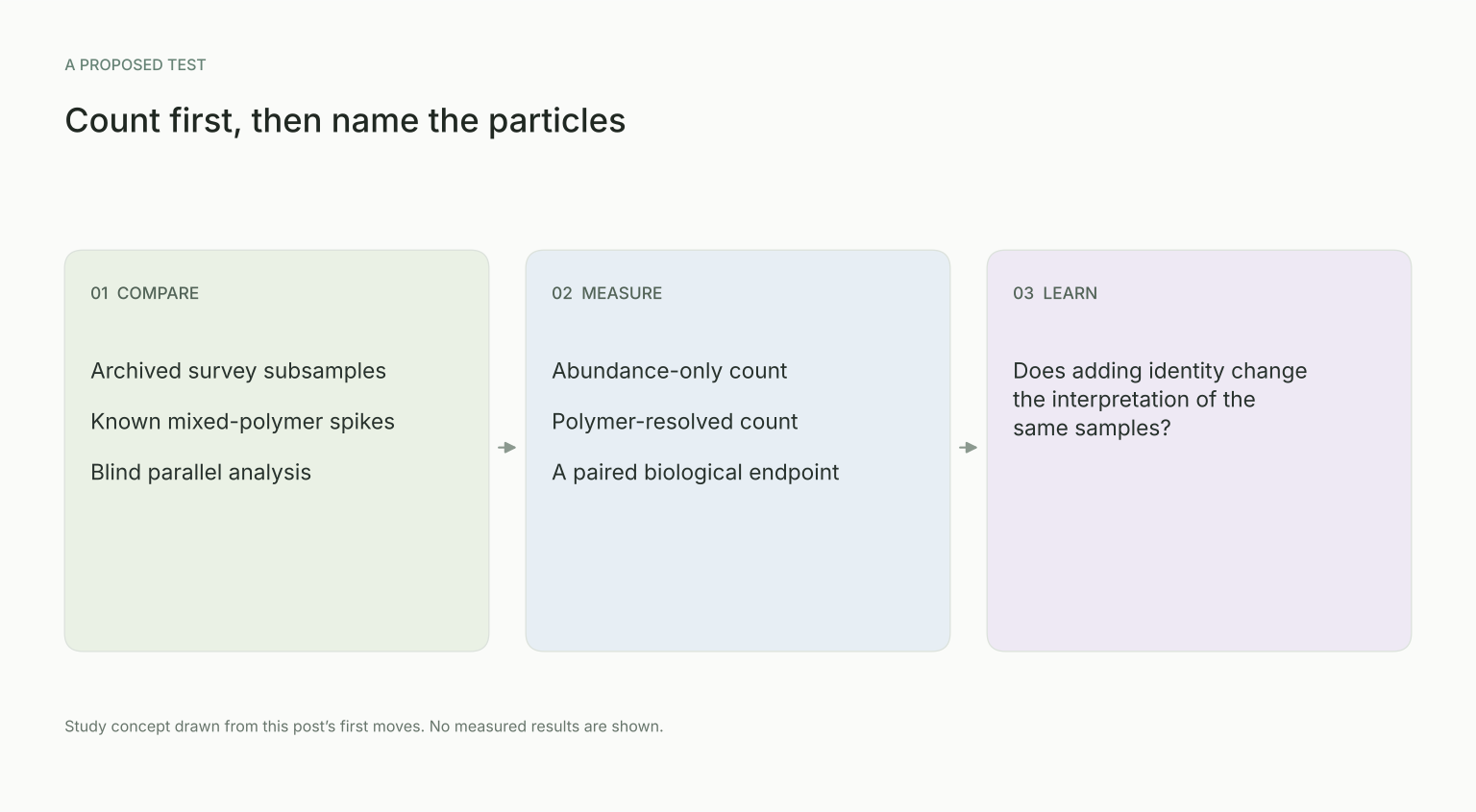
Does adding resolved polymer identification to soil abundance surveys change the reported ecological and geochemical risk enough that abundance-only counts are systematically misleading?
I keep wondering why the studies showing that polymer identity drives the soil response are so rarely the same studies doing the careful counting. If naming the polymers reorders the risk ranking, then a lot of tidy abundance numbers are quietly telling us less than we think, especially where density separation has already dropped the heavy plastics.
First moves
- 1
Re-count with identity attached
Take a soil survey that reports only abundance and re-run a subset through a method that names polymers, like Scopetani's oil-based extraction, then check whether the risk ranking changes once high-density polymers are no longer being lost.
- 2
Spike, then blind-count both ways
Spike soils with a known polymer mix at a fixed mass, hand them to one team counting abundance and another resolving identity, and measure how far the two accounts diverge on the same samples.
- 3
Tie identity to a live endpoint
Pair polymer identification with an enzyme panel like Zhao's on the same soils, so any measured harm can be traced to which polymer was present rather than to total load alone.
My working hypothesis
Identity is where the harm lives, and the field is spending most of its effort on the number instead. I think a fair share of abundance-only surveys would rank risk differently if they named their polymers, and the heavy plastics they miss are often the ones that matter. The tools to fix this exist. What is missing is the habit of making identification as routine as counting.
An invitation
If you survey microplastics in soil, I would like to know how often you get to name the polymers you count, and what it would take to make identification as routine as abundance. The evidence keeps telling me identity is where the harm lives, yet the counting and the naming still travel apart. Am I wrong to find that split odd?
Questions about this gap
Can two soils have the same count but different plastic mixtures?
Yes. A total count does not specify polymer identity, size, or shape. This post asks whether adding identity changes how those soils are compared.
Would polymer identification alone establish ecological risk?
No. Identity improves characterization, but exposure and measured biological or chemical responses are still needed to support a risk comparison.
What is the purpose of a blind spiking test?
A known mixture provides a reference, while blinding reduces expectations influencing the count. It reveals which materials each measurement approach recovers.
Why revisit an existing abundance survey?
Reanalyzing a subset can test the added value of polymer identification on material that already has a counting record, keeping the comparison focused.
What would it mean if the ranking did not change?
It would suggest that identity added little to that particular comparison under the tested conditions. It would not make polymer identification unnecessary in every study.