
A plant in contaminated soil never meets microplastics one change at a time. It meets shifted soil structure, a rewired microbe community, altered nutrient cycles, and other pollutants riding in on the plastic, all at once.
The literature has found the separate levers. Sajjad and colleagues report that microplastics under 5 mm change soil structure, porosity, bulk density, water-holding capacity, and infiltration, and that they carry co-contaminants: phthalates, antibiotics, PAHs, and more. Aralappanavar and colleagues describe a different lever in the same soil, the microbes: contaminated soils and the film of microbes on the plastic itself carry less varied communities, with more nitrogen-fixers and phosphorus-solubilizers and fewer nitrifiers and ammonia oxidizers.
A root would feel every one of those changes. It cares about how much water the soil holds, which nutrients its microbial neighbors are cycling, and what else is dissolved alongside them. The one experiment I found that holds two levers in view at once is Han and colleagues'. Mixing PE and PLA into a silty loam at 0.5% under a rice-wheat rotation, they watched macroaggregates fall from 84% to 65-71% and microaggregates climb from 17% to 29-35%, while plastic explained about 54% of the change in the bacterial community. The structural break and the microbe shift moved together as one coupled process.
The co-contaminant point makes the separation risky. If microplastics both stress a plant and carry other toxins to it, the combined dose is exactly what a single-factor study cannot see.
Han's result matches Aralappanavar's microbe picture and Sajjad's structural one, but only because both were measured in the same pots. Neither then closes the loop to what the plant took up or how it fared. Van den Berg and colleagues show the exposure is real and cumulative: sludged fields in eastern Spain held about 2130 light and 3060 heavy microplastics per kilogram against roughly 930 and 1100 in unsludged fields, adding a few hundred per application.
Part of why the combined experiment is rare: Guo and Sajjad both note there is still no standard way to sample and measure microplastics in soil. A multi-factor experiment is harder to run when two labs cannot be sure they are measuring the same thing.
- Type
- Under-studied interaction
- Field
- Plant uptake and phytotoxicity
- Comparative basis
- Single-stressor work vs. combined
- Methods
- Greenhouse pots, 16S sequencing, field surveys
Why this is answerable now
The single levers are documented
Reviews agree microplastics reshape soil structure and water-holding and carry co-contaminants (Sajjad), and separately lower microbial diversity and shift nutrient cycling (Aralappanavar). The one-factor stories are mature enough that the combinations are the obvious next thing.
A coupling method already works
Han measured aggregate structure and the bacterial community in the same pots and watched them move together. The method for studying two soil changes at once is proven. It just has not reached the plant.
The exposure is real and rising
Sludged fields carry roughly double the microplastics of unsludged ones, gaining a few hundred more per kilogram with every application. Plants already grow where these changes pile up season after season.
The substitution question is live
Biodegradable PLA damaged soil structure about as much as regular PE. Switching plastics may not protect a crop, and only experiments that reach the plant can tell us whether it does.

Sources cited
Papers I read for this question. These notes distinguish reviews from primary studies and identify the limits of my access.
The 2020 review that said soil is ignored next to the ocean.
Best summary of how plastic changes soil microbes and nutrient work.
Top source is mulch film. No standard way to measure yet.
04Microplastics alter soil structure and microbial community
Primary experimentThe rare study measuring soil structure and microbes in the same pots.
Sludged fields held roughly double the microplastics, building up per application.
What’s missing — the gap
When microplastics change soil structure, rewire the microbes and their nutrient cycling, and deliver co-contaminants all at once, do these changes combine to alter what a plant takes up and how it is harmed in a way single-factor studies cannot predict?
Each change on its own is documented. Whether they add up, cancel, or multiply once a root meets them together is not. If the combined effect is just the sum of the singles, the field can keep studying one lever at a time. If it is not, most of the current evidence is describing a plant that does not exist.
First moves
- 1
Carry the coupled soil changes to the plant
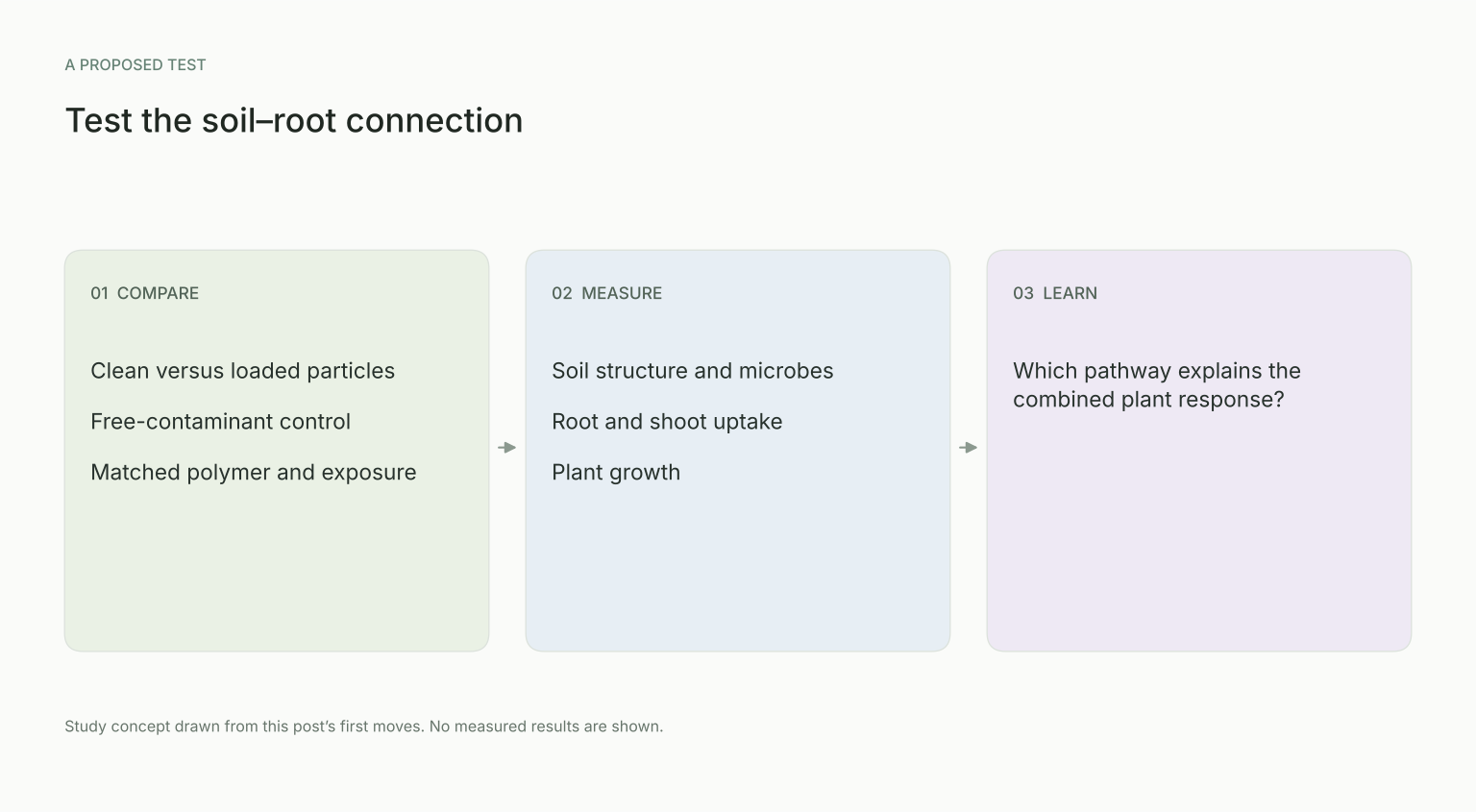
Take Han's design, microplastics moving soil structure and the microbe community together, and add plant endpoints: uptake into root and shoot, growth, and phytotoxic response. The smallest test is whether plant harm tracks the structural shift, the microbe shift, both, or neither.
- 2
Separate the plastic from its cargo
Sajjad shows microplastics carry phthalates, antibiotics, and metals. Grow plants in soil with clean particles versus particles pre-loaded with a co-contaminant, at field-relevant doses, to see whether harm comes from the plastic reshaping the soil or from what it ferries in.
- 3
Test biodegradable on the plant, not just the soil
Han found PLA and PE damaged structure similarly. Extend that to plant uptake and phytotoxicity across a full season at the field concentrations van den Berg measured, to see whether switching plastics spares the crop or only looks kinder to the soil.
My working hypothesis
The isolation habit is the problem. The single-factor map looks nearly finished, and the combined map is close to blank. My honest guess is that co-exposure will turn out to matter, mostly because the plastic carries other poisons, so the plant sees a dose no single-factor study is measuring. I would rather the field spent its next experiments watching the changes meet than adding one more clean, lonely variable.
An invitation
If you work on plant uptake, the plastisphere, or soil structure, I would like to know whether you have ever carried a measurement all the way to the plant while more than one soil property was moving at once, and whether the harm tracked what you expected. Everyone seems to describe one face of a soil the plant experiences whole. Am I wrong to find it strange that we so rarely watch the pieces meet?
Questions about this gap
Which pathways could affect the plant together?
Changes in soil structure, microbial nutrient processes, and co-contaminant exposure may occur in the same treatment. The question is whether their combined effect can be predicted from separate studies.
Why compare clean and pre-loaded particles?
It helps distinguish the physical particle from its chemical cargo. A free-contaminant treatment is also useful for testing whether loading changes the response.
Should roots and shoots be measured separately?
Yes. They represent different steps in a possible uptake pathway. Combining them could obscure where particles or associated effects occur.
Would a biodegradable label predict the crop response?
It does not settle the question. The proposed comparison measures plant endpoints directly for the tested materials under matched conditions.
Does a soil response prove a plant response?
No. That missing connection is the purpose of the proposed experiment. Plant uptake, growth, and physiological endpoints need their own observations.