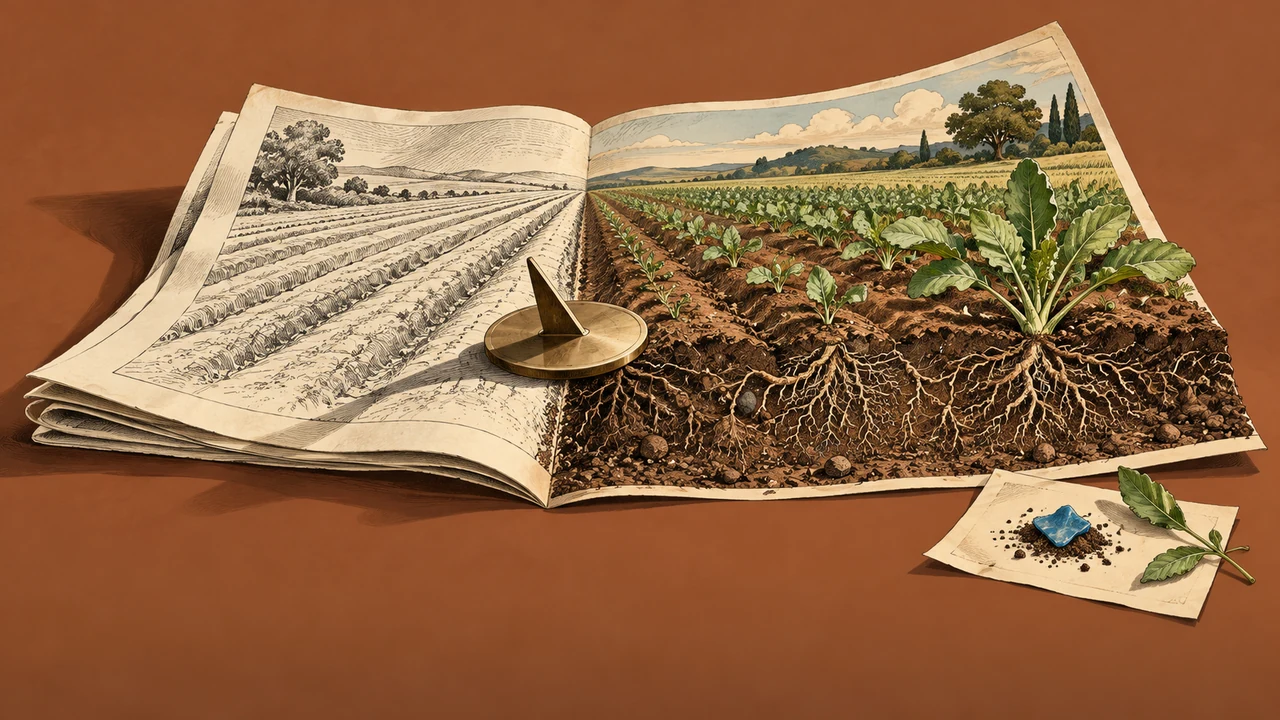
Microplastics in soil get cited everywhere as a threat that climbs the food chain and ends up in us. When I go looking for the studies that pin that down, I keep landing on the same thing: single-shot experiments and reviews that lean on them, and very little work that has rerun the effect under conditions that look like a real field.
Start with the bench work, because that is where the specifics live. Zhao, Lozano and Rillig tested how plastic shape, polymer, and exposure time change soil pH, respiration, and four enzymes, mixing twelve microplastics into a loamy sandy soil at 0.4% by weight over 31 days. Foams and fragments raised pH, most enzymes were knocked down depending on shape, and the usual link between enzymes and pH got weaker once plastic was present. The answer to whether microplastics hurt the soil was never one number. It depended on the shape, the polymer, and how long the plastic had been there.
Put that next to the reviews and you can feel the tension. Aralappanavar and colleagues synthesize how plastic shifts soil microbes and the cycling of carbon, nitrogen, and phosphorus: lower diversity, more plastic-degraders and nitrogen-fixers, but fewer nitrifiers, the microbes that turn ammonia into the nitrate a plant actually drinks. Then the review says the quiet part out loud: most of that evidence comes from short, high-dose lab jars, and it calls for long field studies at realistic amounts. The review that assembles the effect is warning that the effect was mostly measured in a hurry, at doses higher than a real field sees. That fits Zhao: if one study bends this much with conditions, a pile of high-dose short experiments is not a confirmed result.
The food-chain and human piece is thin in a way that bothers me. Guo and colleagues document transfer up soil food chains and the health risks that follow, and put soil forward as a contaminant that deserves its own study. Kumar and colleagues list what is still missing: biomagnification and toxic effects on humans and animals sit in their future-needs column, not their findings.
Sajjad and colleagues add the practical blocker. There is no standard sampling or extraction method for soil plastic, so two labs cannot even fail to replicate each other cleanly. Without a shared recipe, a failed rerun could mean the effect is not real or just that the methods differed.
So the human-exposure story, the part everyone repeats, is carried mostly by reviews pointing forward, not by reproduced measurements. I keep wondering how a claim this important stayed in the needs-confirming pile for so long while being cited as if it were settled.
- Type
- Under-confirmed primary work
- Field
- Food-chain transfer and human exposure
- Comparative basis
- Cited claims vs. reruns
- Methods
- Microcosm assays, enzyme assays, fauna endpoints
Why this is answerable now
Reviews outrun replication
The syntheses now openly say most soil-plastic effects come from short, high-dose lab jars and ask for long field work at realistic amounts. The field has admitted the gap in print. Someone just has to fill it.
Context is everything
Zhao and colleagues showed effects swing with shape, polymer, and exposure time. That is exactly the setup where a claim needs reproducing across labs before it can be trusted as general.
The human end is a future need
Biomagnification and toxic effects on humans and animals appear as research needs, not confirmed results. The most consequential claim in the area is the least confirmed.
No standard to reproduce against
There is still no agreed way to sample and extract plastic from soil. Without a shared protocol, two labs cannot even fail to replicate each other cleanly, which is its own reason to act.

Sources cited
Papers I read for this question. These notes distinguish reviews from primary studies and identify the limits of my access.
Frames the food-chain-to-human thread but reproduces no transfer measurement.
Admits most evidence is short, high-dose jars needing field checks.
No standard method, so labs cannot cleanly fail to replicate each other.
Human biomagnification and toxicity sit in the future-needs column.
05Microplastics change soil pH and microbial activity by shape and polymer
Primary experimentEffects swing with shape, polymer, and time, so they need reruns.
What’s missing — the gap
For the soil-plastic effects most cited on the path to human exposure, transfer up the food chain, nutrient-cycling disruption, dose-dependent toxicity, can the key primary findings be reproduced at field-realistic doses over long durations with a shared protocol, or do they hold only in the short, high-dose lab jars where they were first measured?
The reviews already admit most of the evidence is short and high-dose, and the one careful primary study I read bends hard with shape, polymer, and time. That is the profile of a result that might not survive a realistic dose and a longer clock. Nobody has taken a headline effect and simply rerun it under field conditions with a method a second lab could copy. Until they do, the human-exposure story is well cited and unconfirmed.
First moves
- 1
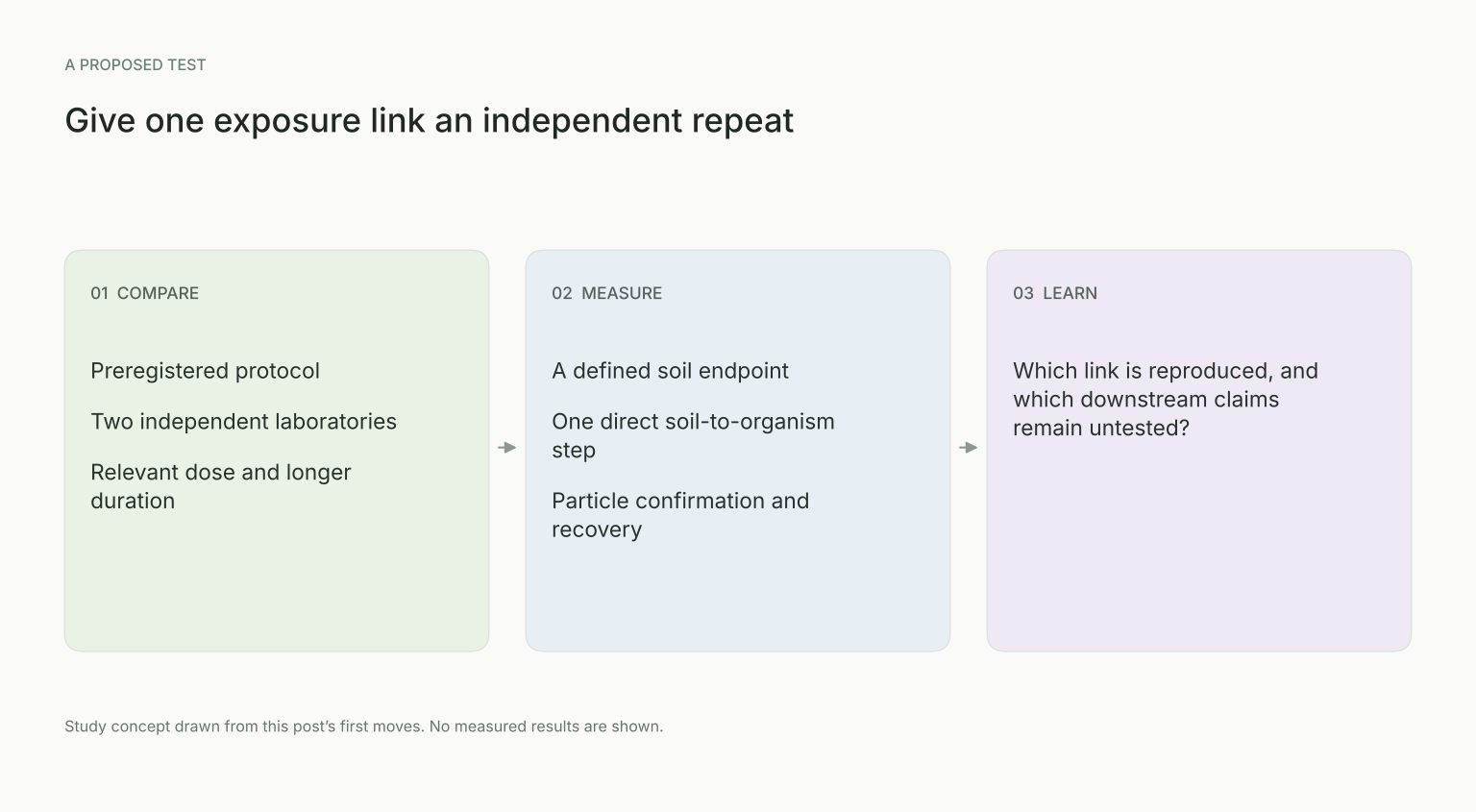
Rerun one cited effect at field dose
Take a single high-profile result, say Zhao's shape-dependent enzyme inhibition, and rerun it at the amounts a real agricultural soil would see, over months rather than weeks. The smallest honest test of whether it is real is whether it survives a realistic dose and a longer clock.
- 2
Same protocol, two labs
Split one pre-registered design across two independent labs using identical soil, plastics, and timing. A clean agreement or disagreement on even one endpoint would teach us more about confirmation than another single-lab study.
- 3
Measure one food-chain step directly
Instead of citing transfer, measure one link of it, soil to a single earthworm or plant tissue, with counting you can defend. Turning a future-needs bullet into one reproducible number is the highest-value move here.
My working hypothesis
I think the general direction is probably right and the specific human-exposure claims are far shakier than their citation count suggests. The reviews themselves say the evidence is short and high-dose, and the primary work swings with conditions, so I read the food-chain-to-human story as plausible and unconfirmed. My honest guess is that some effects will survive a realistic dose and a longer season and some will not, and right now nobody can tell you which. The least glamorous work in this area, one careful rerun a second lab can copy, is also the most important.
An invitation
If you work on soil microplastics, I am not asking for a new effect. I am asking whether the ones we already cite hold up when someone reruns them at a realistic dose, over a real season, with a method a second lab can copy. That feels like the least glamorous and most important work in the area, and I would love to be pointed at the replications I have simply failed to find. If the human-exposure story is this widely repeated and this rarely reproduced, what am I missing?
Questions about this gap
Which claim can the first repeat actually test?
A defined soil or organism endpoint can be repeated directly. Repeating enzyme inhibition does not, by itself, replicate transfer to humans.
Why combine realistic doses with longer observation?
Both exposure level and duration can influence the response. The design should specify them so a change from the original study can be interpreted.
What does a two-laboratory protocol add?
It tests whether an independently run procedure yields comparable results. Shared reference materials and analysis rules help distinguish laboratory variation from a biological difference.
Why measure one food-chain step directly?
It replaces an inferred link with an observation. Confirming soil-to-organism transfer is a narrower, more testable claim than the entire path to human exposure.
Would an unsuccessful repeat make all exposure concerns disappear?
No. It would limit one claim under specified conditions. Other pathways and endpoints would still need their own evidence.