
We study soil poisons one at a time. Someone measures what a microplastic does to soil enzymes, someone else what a heavy metal does, a third person a fungus, each in its own clean experiment. Then we act surprised that nobody can say what happens when all three turn up in the same handful of dirt.
The single-stressor part is now reasonably mapped. Zhang and colleagues pulled together 6223 observations of plastic residues and microplastics in soil, across residue loads of 1-2700 kg/ha and microplastic concentrations from 0.01 up to 600,000 mg/kg. Plastic cut the soil's wetting-front movement, dissolved organic carbon, and total nitrogen, each falling between 7 and 14%, and pulled plant height and root biomass down by 13% and 14%. The odd result was soil enzyme activity, which rose anywhere from 7% to 441%. I read that jump as a stress response. Working harder is what microbes do under strain.
The studies start to line up here, and the cracks show. Aralappanavar and colleagues find that contaminated soils and the film of microbes on a plastic surface carry less varied communities, heavy on plastic-degraders like Actinobacteria and Proteobacteria, with more nitrogen-fixers and phosphorus-solubilizers but fewer nitrifiers and ammonia oxidizers. Plastic rearranges which microbes are present, and the nitrogen-cycling specialists lose ground. Both reviews stress the effect flips with dose, plastic type, and soil, so the same plastic can help one process and hurt another in one sample.
The interaction problem is the actual gap. The microbial review is explicit that microplastics rarely arrive alone, and it names combined toxicity with co-contaminants as an open frontier. Wang and colleagues say it plainer: nanoplastics, 1 to 1000 nm, co-transport with organic pollutants and heavy metals, and can carry pathogens and host their own microbes as they move. A nanoplastic often carries several other stressors with it.
The strongest evidence, as the microbial review admits, still comes from short high-dose lab microcosms testing one thing at a time. We have measured each stressor alone and barely tested any combination.
Dhaka and colleagues add that one common polymer, PET, spans every size from macro to nano at once and turns up in soils, sediments, groundwater, and drinking water, though I read that one loosely since only the abstract was available. Guo and colleagues note the deeper problem: soil is still understudied next to marine and freshwater systems, even though plastic pours in through mulch film, sludge, irrigation, and the air. The most-exposed compartment is the least examined.
- Type
- Under-studied interaction
- Field
- Soil ecotoxicology and risk
- Comparative basis
- Single-stressor work vs. combined
- Methods
- Meta-analysis, microbial sequencing, field trials
Why this is answerable now
The single-stressor map is drawn
A 6223-observation meta-analysis already pins down what plastic alone does to water movement, carbon, nitrogen, plants, and enzymes. The obvious single-variable experiments are done. The combinations are what's left.
The reviews name the gap out loud
The microbial review flags combined toxicity with co-contaminants as a frontier and asks for long-term field studies at realistic concentrations. When a field's own reviews keep pointing at the same missing piece, that is where to build.
Plastics carry other things
Nanoplastics co-transport with heavy metals and organics and can carry pathogens (Wang). That makes studying plastic in isolation a study of the wrong thing.
Soil is where exposure lands
Soil is still understudied next to marine and freshwater systems, even as plastic enters by mulch film, sludge, irrigation, and air (Guo). The neglected compartment and the neglected question are the same place.

Sources cited
Papers I read for this question. These notes distinguish reviews from primary studies and identify the limits of my access.
The 2020 review that said soil is ignored next to the ocean.
Names combined toxicity with co-contaminants as an open frontier.
Nanoplastics carry metals, organics, and pathogens as they move through soil.
04Occurrence, toxicity and remediation of PET plastics
Abstract onlyPET spans every size and reaches soil, water, and human cells. Abstract only.
6223 observations: plastic cut carbon, nitrogen, and plant growth; enzymes spiked.
What’s missing — the gap
With plastic's solo effects on soil now mapped across thousands of observations, does co-exposure to plastic plus a common companion, a heavy metal, an organic pollutant, or a pathogen, change soil nitrogen cycling, microbial diversity, or plant growth differently than either stressor alone at the same realistic field dose?
The reviews say microplastics rarely arrive alone and that nanoplastics carry other poisons with them, yet almost every toxicity study tests one stressor in one dish. If the combined effect is plain addition, the field can relax. If it is not, the single-stressor map that looks finished is describing a soil that does not exist.
First moves
- 1
Run the two-by-two nobody has run
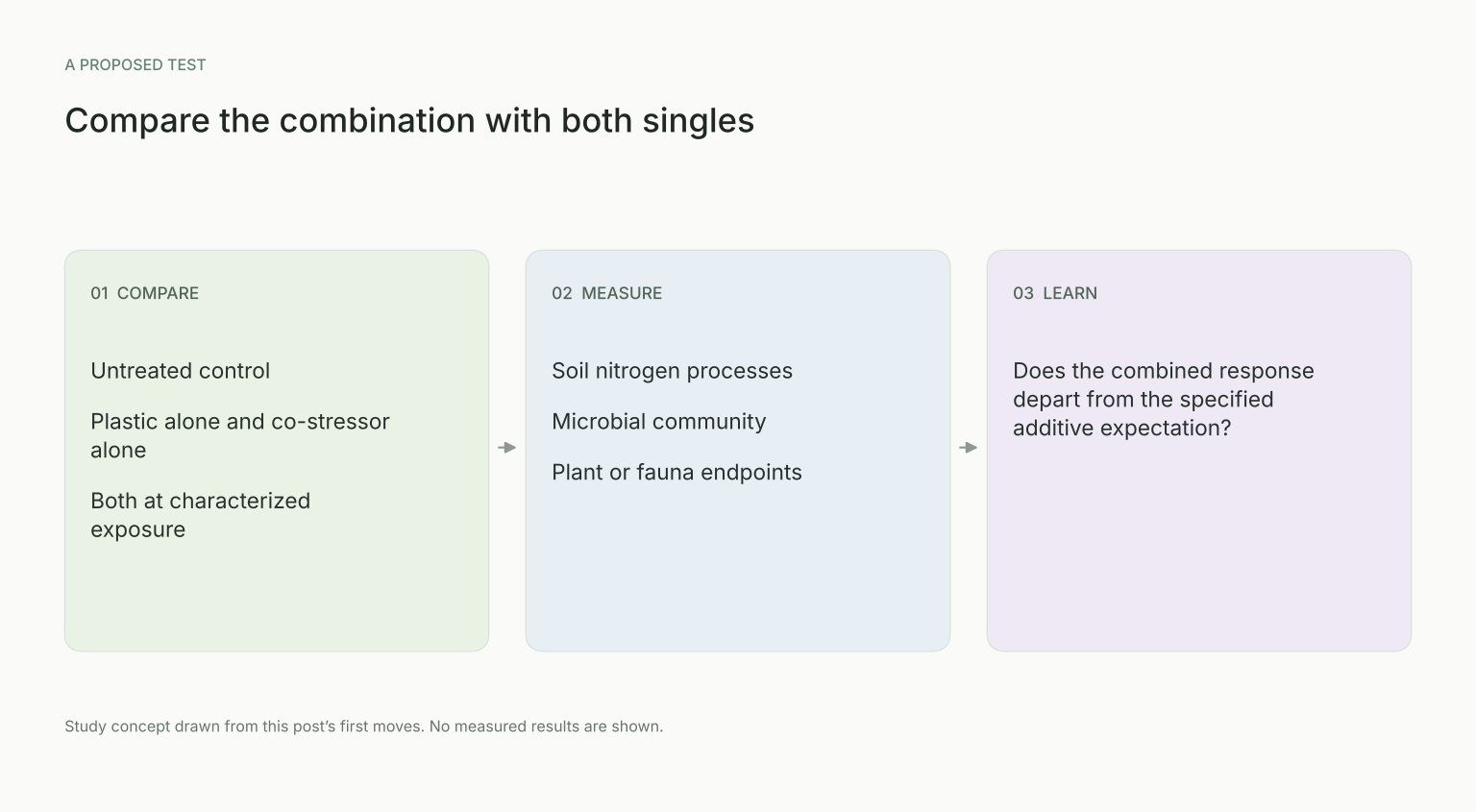
Take one plastic, a weathered nanoplastic per Wang, and one co-contaminant it co-transports with, a heavy metal, and test all four cells: neither, each alone, both together, on soil nitrogen cycling and microbial diversity. If both equals the sum of the singles, the field can relax.
- 2
Take it out of the microcosm
Aralappanavar keeps asking for long-term field work at realistic concentrations. Seed field plots near the low end of the meta-analysis range, not the 600,000 mg/kg lab extreme, and track the same enzyme and nitrogen endpoints across a full growing season.
- 3
Sample what the plastic carries
Since nanoplastics can carry pathogens and host microbes, sample the film on the plastic directly and sequence what is on it versus in the surrounding soil. That turns the vague combined-toxicity worry into a concrete list of what is being delivered and where the nitrogen-cyclers are pushed out.
My working hypothesis
Studying plastic alone is quietly answering the wrong question. My guess is that co-exposure will turn out to matter, because the plastic carries metals and organics that the soil and its microbes meet at the same time as the plastic itself. The single-stressor map looks nearly finished. The interaction map is close to blank, and I think that blank is where the real work is now.
An invitation
If you work on soil ecotoxicology, you probably have the pieces already: a plastic exposure protocol, a co-contaminant assay, a microbial pipeline, just never wired into one experiment. I would love to see someone point them at each other and tell me whether the combined effect is boring addition or something stranger. Am I wrong to find that gap the most interesting place left to dig?
Questions about this gap
What does the four-treatment comparison test?
A control, plastic alone, a second stressor alone, and both together allow the combined response to be compared with an explicitly defined expectation from the single treatments.
Why not assume two stressors add linearly?
Their effects can depend on availability, soil conditions, and biological responses. The proposed experiment tests the combination rather than presuming its direction.
Does detecting microbes on plastic show pathogen delivery?
No. Community detection does not establish pathogenicity or successful transfer. Those claims would require targeted identification and additional evidence.
Why distinguish pristine and weathered material?
Surface properties and associated substances may differ. A defined material history makes the exposure more interpretable and helps test whether a laboratory result transfers.
Would a combined response establish human health risk?
No. The proposed endpoints concern soil systems. Translating them into human exposure or health consequences would require a separate chain of evidence.